
You’re queuing at the supermarket when you feel it – that familiar cramping in your abdomen. Your chest tightens. Within seconds, you’re scanning for the toilet, heart pounding, mind racing through worst-case scenarios. Later, at home, your stomach feels worse. And you wonder: did the anxiety make your IBS flare up, or did your IBS trigger the anxiety?
If you live with irritable bowel syndrome, you already know how exhausting this IBS anxiety loop can be. One moment you’re managing fine; the next, you’re trapped in a cycle where worry about your symptoms makes them worse, which creates more worry, which creates worse symptoms. It’s not your imagination. It’s not “all in your head.” And you’re not being dramatic.
The connection between IBS and anxiety is real, bidirectional, and backed by solid science. More importantly, once you understand how this loop works, you can start to break it. You don’t have to be held hostage by your digestive system or your nervous system any longer.
Why Your Gut and Your Brain Are Having a Constant Conversation
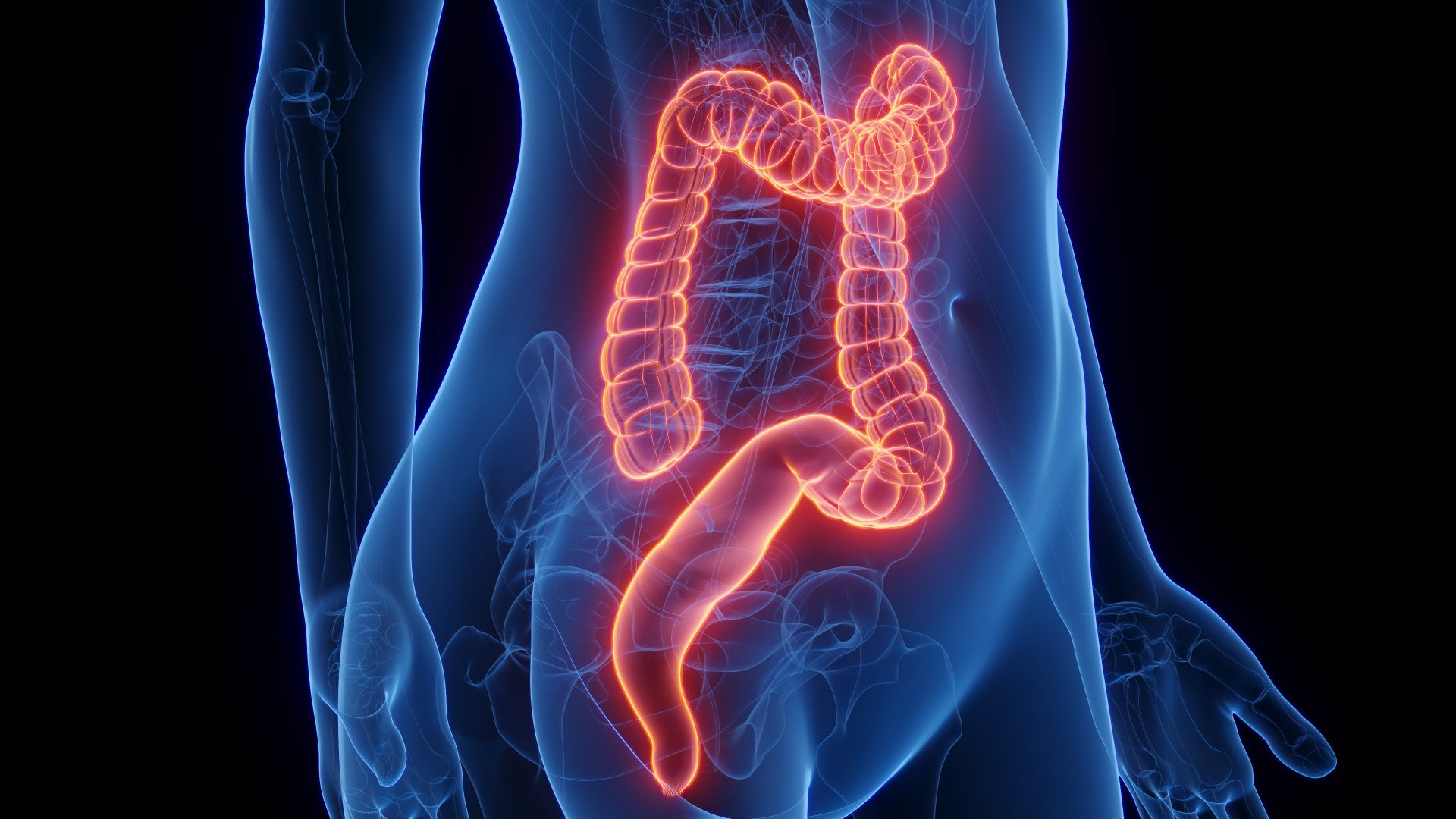
Your digestive system and your brain are in continuous communication through something called the gut-brain axis. They’re connected by the vagus nerve – a major motorway running between your brainstem and your abdomen. This nerve influences how your gut moves, how sensitive it is to pain, and how it produces the hormones that regulate digestion.
The conversation runs both ways. When you feel anxious, your brain sends stress signals down to your gut. Your digestive system responds by speeding up, slowing down, or cramping – the classic IBS symptoms. Those symptoms then send alarm signals back up to your brain, triggering more anxiety. And round it goes.
One patient described it perfectly: “IBS is the one making us stressed.” Another said, “I can’t imagine what my life would be like if I had a functional digestive system.” The exhaustion isn’t just physical. It’s the mental load of constantly being on high alert.
Quick Tip: Belly Breathing
Place one hand on your belly. Breathe in through your nose so your hand rises. Breathe out gently through your mouth, focusing on letting all the air escape. Pause naturally for a second or two before breathing in again. Three or four rounds of this can interrupt the stress signal travelling down your vagus nerve. Use it before you leave the house or when you feel symptoms starting.
The stress response evolved to keep us safe from immediate physical threats. Your body releases adrenaline, your heart pumps faster, and your digestive system either speeds up to lighten your load (diarrhoea) or shuts down to preserve energy (constipation). In prehistoric times, this made sense. Today, when the “threat” is a work meeting or a dinner out, your gut still responds the same way – but there’s nowhere to run.

The Emotional Toll of Living in the Loop
Perhaps the hardest part isn’t the physical symptoms themselves. It’s the constant state of vigilance. You become a detective, tracking every sensation, scanning every environment for escape routes. As one person put it: “My hugest fear is not being able to find a restroom.”
This hypervigilance is exhausting. You might find yourself checking where the toilets are the moment you arrive somewhere. You might avoid social events, or leave early when symptoms flare. You might feel embarrassed explaining to friends why you need to cancel plans again. The isolation compounds the stress, which feeds back into worsening symptoms.
You’re not overreacting. The anxiety you feel is a completely rational response to unpredictable symptoms that can disrupt your life at any moment. The problem is that your rational protective response has become part of the problem itself.
You don’t have to navigate this loop alone. Therapy can help you develop specific strategies to manage both the anxiety and the symptoms – breaking the cycle at both ends.
Quick Wins to Start Breaking the Cycle
You can begin interrupting this loop today with three practical strategies. These aren’t permanent solutions, but they’re powerful tools you can use immediately when you feel the cycle starting.
1. Label the urge, don’t obey it immediately
When you feel the urgent need to go to the toilet, pause for 30 seconds. Say to yourself: “This is an urge, not an emergency.” Your body is very good at false alarms. By waiting briefly – even just while you count to 30 – you start to retrain your nervous system to distinguish between genuine need and anxiety-driven urgency. Gradually extend this to a minute, then two.
2. Delay the toilet check
When you arrive somewhere new, resist the urge to scan for the toilets immediately. Give yourself 20 minutes before you look. You’re not forbidding yourself from finding them – you’re just not making them the first thing you do. This small delay interrupts the automatic prioritisation of safety-seeking behaviour. Each time you manage it, you’re teaching your brain that you can tolerate a bit more uncertainty without immediate reassurance.
3. Breathe into your belly, not your chest
When anxiety hits, most people breathe shallowly into their upper chest. This actually signals danger to your nervous system and can trigger more gut symptoms. Instead, place one hand on your belly and breathe deeply so your hand rises. This diaphragmatic breathing activates the calming branch of your vagus nerve and directly soothes your digestive system.
Remember: Progress isn’t linear. You might successfully use these strategies one day and find they don’t work the next. That’s normal. You’re retraining a deeply ingrained pattern, and that takes time and repetition.

When to Seek Medical Review vs When to Focus on the Anxiety
One of the most confusing aspects of the IBS anxiety loop is knowing when your symptoms need medical attention and when they’re being driven by stress. This uncertainty itself can become another source of anxiety.
A helpful framework: if your symptoms have changed significantly (new types of pain, blood in stools, unexplained weight loss, symptoms that wake you at night), that warrants a conversation with your GP. If your symptoms are the same familiar patterns but more frequent or intense during stressful periods, that’s likely the anxiety loop at work.
Most people with IBS benefit from both medical management and psychological support for chronic conditions. Your gastroenterologist can help with the physical symptoms – medication, dietary guidance, specialist tests. But if anxiety is a major driver of your flare-ups, therapy addresses the other end of the loop. You need both.
Cognitive Behavioural Therapy (CBT) and Acceptance and Commitment Therapy (ACT) are particularly effective for IBS. They don’t just teach you to “think positively.” They help you change your relationship with both the physical sensations and the anxious thoughts. You learn to notice symptoms without catastrophising about them. You develop practical skills to calm your nervous system. You break the habit of avoidance that keeps the loop spinning.
Quick Tip: The Google Spiral
If you find yourself repeatedly searching your symptoms online, set a rule: you get one 10-minute research session per concern, then you’re done. Before you close the browser, write down what you learnt. Then ask yourself: did that genuinely help? Did you discover something new and useful, or do you feel the same (or worse) than when you started? This simple check helps you notice whether you’re seeking information or seeking reassurance. They feel similar but have very different effects.
Building Long-Term Freedom from the Loop
Breaking the IBS anxiety loop isn’t about perfect control. Your digestive system will always be somewhat sensitive. Stressful life events will still trigger flare-ups sometimes. The goal isn’t to eliminate symptoms entirely – it’s to stop the symptoms from controlling your life.
Over time, with the right support, you can develop a different relationship with your gut. Instead of seeing every sensation as a threat, you learn to observe it with curiosity. You build confidence that you can manage symptoms when they arise. You gradually expand the boundaries of what you’re willing to do, even when symptoms are present.
The loop loses its power when you stop fighting it and start working with it. Your gut and your brain will continue their conversation – but you can change what they’re saying to each other.
You Don’t Have to Do This Alone
The IBS anxiety loop can feel overwhelming, especially when you’re trapped in it. Specialist psychological support can help you understand your unique pattern and develop practical strategies that work for your life.
I work specifically with people navigating chronic health conditions like IBS. In our free initial consultation, we can talk about what’s happening for you and whether therapy might help. You don’t have to figure this out on your own.